

Direct Contracting Can Put Health Care Dollars Back to Work
Published by the DC Journal
September 25, 2026
By Mark Newman, Founder and CEO, Nomi Health; Stephanie Quinn, EVP, External Affairs and Practice Experience, American Academy of Family Physicians (AAFP); Jenny Goins, Interim President and CEO, National Alliance of Healthcare Purchaser Coalitions; Randa Deaton, President and CEO, Employers’ Forum of Indiana; James Gelfand, President and CEO, The ERISA Industry Committee; and Taylor Hittle, Executive Director, Association for Direct Care
In almost every part of the American economy, the person paying the bill knows the price and chooses who to pay. Health care is the glaring exception.
A growing maze of intermediaries, opaque contracts and misaligned incentives separates those paying for health care from those delivering it, adding costs and making the health care dollar nearly impossible to follow.
Nomi Health founder and CEO Mark Newman learned this after the birth of his son. A clinician offered a 30% discount if he paid the bill directly rather than submitting it through his insurance carrier. If the clinician could accept 30% less and still come out ahead, where was the rest of the money going?
Employers confront versions of that question every day. The average annual premium for employer-sponsored family coverage reached $26,993 in 2025, a 6% increase in a single year and a 26% increase over five years. Those numbers help explain why 36% of Americans report delaying or skipping medical care because of cost. They also explain why employers are urgently searching for a better way to purchase health care.
This week, we are launching the Association for Direct Care to help build that better way.
Our members include employers, physicians, and companies that help connect purchasers with high-quality care. We represent different parts of the health care system, but we all agree on a basic and common-sense principle: Employers and patients should have a more direct relationship with those delivering the care.
Traditionally, employers rely on carriers or third-party administrators to negotiate clinician prices, often with little visibility into the process. Direct contracting allows employers to establish clear terms for cost, quality and access directly with physicians, hospitals and other care team members.
Arrangements can include direct primary care, centers of excellence, bundled surgical prices and customized provider networks. By reducing unnecessary administrative layers, direct contracting can lower employers’ costs while giving patients better access to care and providers fair, prompt and predictable payment.
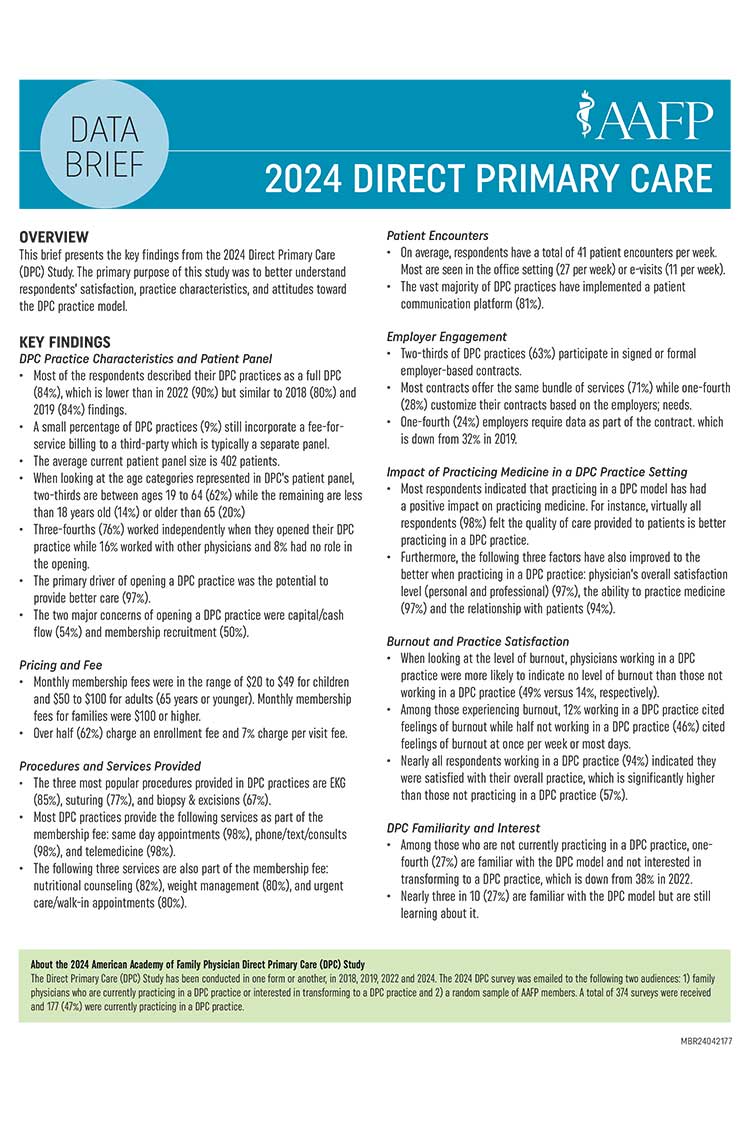
Early results are proving that this model is working for employers. A risk-adjusted analysis of one Michigan employer cohort found medical spending was up to 29% lower, with greater use of primary care and fewer emergency department visits.
Employers elsewhere are reporting the same thing. One member of The ERISA Industry Committee, a trade-association representing large employers, saw emergency department use decline by 14% after implementing a direct primary care arrangement. A National Alliance of Healthcare Purchaser Coalitions survey found that employers contracting directly with providers were 50% more likely to experience below average health care costs.
The benefits extend to the physicians delivering that care. One AAFP member left a hospital-owned practice governed by patient quotas for direct primary care, where she could offer longer appointments, address multiple concerns and avoid unnecessary referrals and return visits. Studies cited by AAFP found reductions of 65% in emergency department visits and 50% in hospitalizations among patients in certain direct primary care practices.
Indiana shows how policy can create opportunities for direct contracting. It is the first state to require hospitals to offer direct-to-employer arrangements at or below 260% of Medicare. The state’s initial review found every participating hospital system in compliance. One Indiana health system now offers services to more than 75 businesses, 125 public schools and 300 public safety agencies through its employer program.
These success stories demonstrate what is possible, but too many employers remain unable to pursue direct contracting because of regulatory, contractual and administrative barriers. Some cannot obtain timely, usable data from the vendors managing their plans. Anticompetitive contract terms can prevent employers from steering patients toward higher-value providers. Multistate employers face uncertainty about how different state laws apply, while smaller businesses may lack the resources to negotiate arrangements on their own.
The Association for Direct Care will work to remove those barriers.
Employers want to provide robust benefits at an affordable price to workers and their families. Physicians want to spend more time caring for patients and less time navigating administrative obstacles. Workers want affordable, dependable care without unexplained bills and layers of unnecessary complexity.
Together, we can give employers, physicians and patients a better way to buy, deliver and receive health care.